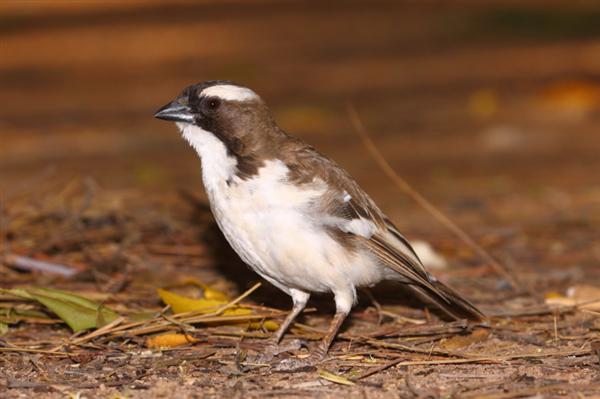
Juvenile in Namibia.
An acacia tree with white-browed sparrow-weaver nests in the Okavango delta, Botswana.
Male, At L.Baringo.
White-browed sparrow-weaver nests in Botswana, Africa.
A pair relaxing on a branch of tree.
Emmanuel Stephen is a biologist. His research interests include Plants and Shrubs of East Africa,Mammals,Birds,Herpertofauna,Insects and Marine life.Currently a student at The University of Nairobi.
Friday, 19 June 2015
Thursday, 18 June 2015
Rufous-tailed weaver
The rufous-tailed weaver (Histurgops ruficaudus) is a species of songbird found in East Africa. Despite its name, it is placed in the sparrow family (Passeridae).
It is a quite unusual sparrow species, and was included in the weaver family (Ploceidae) by many authors even after the other Old World sparrows were separated from the weavers proper, hence its common name. It is placed in the monotypic genus Histurgops.
It is an endemic breeder in Tanzania, but vagrants occur in Kenya too.
Rufous-tailed weaver. Ngorongoro Crater, Tanzania. Photo by Lee R. Berger (Below).
Wednesday, 17 June 2015
Tortoise
Tortoises are a family, Testudinidae, of land-dwelling vertebrates in the order testudineTortoises are shielded from predator by a shell. The top part of the shell is the carapace the underside is the plastron,
and the two are connected by the bridge. The carapace is fused to both
the vertebrae and ribcage, and tortoises are unique among vertebrates
in that the pectoral and pelvic girdles are inside, rather than outside, the ribcage. Tortoises can vary in size from a few centimeters to two meters. They are usually diurnal animals with tendencies to be crepuscular depending on the ambient temperatures. They are generally reclusive
animals.
Above is the Aldabra giant tortoise.
How some of us misuse our lovely tortoises.
Baby tortoise, less than a day old.
Desert tortoise in Rainbow Basin near Barstow, California
22-year-old leopard tortoise.
Skeleton of a tortoise.
in that the pectoral and pelvic girdles are inside, rather than outside, the ribcage. Tortoises can vary in size from a few centimeters to two meters. They are usually diurnal animals with tendencies to be crepuscular depending on the ambient temperatures. They are generally reclusive
animals.
Above is the Aldabra giant tortoise.
How some of us misuse our lovely tortoises.
Baby tortoise, less than a day old.
Desert tortoise in Rainbow Basin near Barstow, California
22-year-old leopard tortoise.
Skeleton of a tortoise.
Testudo graeca ibera, Testudo hermanni boettgeri, Testudo hermanni hermanni, Testudo marginata sarda
Young, 20-year-old Tanzanian leopard tortoise feeding on grass
Pair of African spurred tortoises mate in a zoo.
African spurred tortoise.
Young (3.5 years) African spurred tortoise.
Tortoises generally have the longest lifespans of any animal, and some individuals are known to have lived longer than 150 years.
Female tortoises dig nesting burrows in which they lay from one to 30 eggs.Egg-laying typically occurs at night, after which the mother tortoise covers her clutch with sand, soil, and organic material. The eggs are left unattended, and depending on the species, take from 60 to 120 days to incubate.
Pair of African spurred tortoises mate in a zoo.
African spurred tortoise.
Young (3.5 years) African spurred tortoise.
Tortoises generally have the longest lifespans of any animal, and some individuals are known to have lived longer than 150 years.
Female tortoises dig nesting burrows in which they lay from one to 30 eggs.Egg-laying typically occurs at night, after which the mother tortoise covers her clutch with sand, soil, and organic material. The eggs are left unattended, and depending on the species, take from 60 to 120 days to incubate.
Black-headed weaver
The black-headed weaver (Ploceus melanocephalus), also known as the yellow-backed weaver, is a species of bird in the Ploceidae family. It is found in savanna and similar habitats, typically near water, in West, Central and East Africa. It has also been introduced to Spain and Portugal.
P. victoriae Ash, 1986 is now thought to be a hybrid between P. melanocephalus and P. castanops.
Monday, 15 June 2015
White-eyed slaty flycatcher
The white-eyed slaty flycatcher (Melaenornis fischeri) is a small passerine bird of the genus Melaenornis in the Old World flycatcher family Muscicapidae. It is native to the African highlands from Ethiopia and Kenya through East Africa to eastern Zaireand Malawi. In Kenya, it is mostly absent from the east and the north of the country. It is a highland bird, common in wooded habitats, including gardens.
It is a very distinctive bird normally seen singly or in pairs. White-eyed slaty flycatchers are frequently spotted either hawking forinsects or taking them from the ground. They perch with an upright pose on branches, stumps, signposts.
The specific epithet commemorates the German explorer Gustav Adolf Fischer.
The middle pic is a juvenile flycatcher.
I saw it today outside the Animal Production Department,Upper Kabete Campus [UoN]
Friday, 12 June 2015
African palm swift.
The African palm swift (Cypsiurus parvus) is a small swift. It is very similar to the asian swift, Cypsiurus balasiensis, and was formerly considered to be the same species.
It is a common resident breeder in tropical Africa. The down and feather nest is glued to the underside of a palm leaf with saliva, which is also used to secure the usually two eggs. This is a fast flying bird of open country, which is strongly associated with oil palms.
This 16 cm long species is mainly pale brown in colour. It has long swept-back wings that resemble a crescent . The body is slender, and the tail is long and deeply forked, although it is usually held closed. The call is a loud, shrill scream.
Sexes are similar, and young birds differ mainly in their shorter tails. Palm swifts have very short legs which they use only for clinging to vertical surfaces, since swifts never settle voluntarily on the ground.
These swifts spend most of their lives in the air, living on the insects they catch in their beaks. Palm swifts often feed near the ground. They drink on the wing.
It is a common resident breeder in tropical Africa. The down and feather nest is glued to the underside of a palm leaf with saliva, which is also used to secure the usually two eggs. This is a fast flying bird of open country, which is strongly associated with oil palms.
This 16 cm long species is mainly pale brown in colour. It has long swept-back wings that resemble a crescent . The body is slender, and the tail is long and deeply forked, although it is usually held closed. The call is a loud, shrill scream.
Sexes are similar, and young birds differ mainly in their shorter tails. Palm swifts have very short legs which they use only for clinging to vertical surfaces, since swifts never settle voluntarily on the ground.
These swifts spend most of their lives in the air, living on the insects they catch in their beaks. Palm swifts often feed near the ground. They drink on the wing.
Subscribe to:
Posts (Atom)


